CookEX Titan Steel’s Triple-Layer Construction Explained
When you choose cookware, you may first look at its size, shape, and appearance. However, what sits beneath the cooking surface also matters. The materials inside a pot or pan can affect how it handles heat, how it feels during everyday use, and how easily food releases from the surface.
This is where triple layer cookware comes in.
Triple-layer cookware combines different materials, with each layer serving a specific purpose. CookEX Titan Steel uses this approach by combining stainless steel, an aluminium core and a non-stick cooking surface.
But how does this construction work? And why should you care when choosing cookware for your kitchen?
Let’s take a closer look.
What Is Triple-Layer Cookware?
Triple-layer cookware uses three material layers. Each layer brings a different benefit to the cooking process.
Instead of asking one material to do everything, manufacturers combine materials with different strengths.
In CookEX Titan Steel, the three main layers include:
- Stainless steel outer layer for strength and durability.
- Aluminium middle layer for heat conduction and distribution.
- Non-stick inner surface for easier food release and cooking.
Together, these layers create a cookware system where each material has a clear role.
For example, stainless steel gives the cookware a strong outer structure. Meanwhile, the aluminium core helps move heat through the cookware. Finally, the non-stick surface provides the cooking area that comes into direct contact with food.
Why Use Three Different Layers?

Different cookware materials offer different benefits. Stainless steel, for instance, provides strength and durability. Aluminium, on the other hand, conducts heat efficiently. A non-stick surface can also help reduce sticking and make cleaning easier.
Therefore, combining these materials can create a more balanced cookware design.
This approach can also help when you prepare different types of meals. For example, you might use your cookware to simmer beans, cook Jollof rice, prepare a stew or fry fish.
Each cooking task places different demands on your pots and pans. As a result, the construction of the cookware matters just as much as its appearance.
However, remember that having three layers alone does not guarantee better cookware. The quality of the materials and the way the layers work together also matter.
Layer One, Stainless Steel
The outer layer of CookEX Titan Steel uses stainless steel.
Stainless steel gives cookware a strong and durable structure. It also handles the demands of regular kitchen use, including cooking, washing and storage.
For busy households, this strength can make a difference. You may use your pots several times a week, move them between burners and stack them after cleaning. Therefore, a strong outer structure can support everyday use.
CookEX Titan Steel also features a Magnetic 18/10 Stainless Steel Base.
This magnetic base helps the cookware work with induction cooktops. In addition, the collection works with gas, electric and ceramic cooktops.
So, the stainless steel layer does more than give the cookware its polished appearance. It also forms an important part of its overall construction.
Layer Two, The High-Conductivity Aluminium Core
Next comes the aluminium core.
Aluminium conducts heat efficiently, which makes it useful in multi-layer cookware. When heat reaches the base of the cookware, the aluminium layer helps carry that heat across the cooking area.
Think of the aluminium core as the cookware’s heat-distribution system.
For instance, when you cook a pot of stew, you want the heat to move through the cookware so that the food cooks properly. Similarly, when you prepare beans or rice, good heat distribution can help you manage the cooking process.
CookEX Titan Steel uses a High-Conductivity Aluminium Core within its layered construction.
This core works alongside the stainless steel layers rather than replacing them. As a result, the cookware can combine the strength of stainless steel with the heat-conducting properties of aluminium.
Layer Three, The Non-Stick Cooking Surface
The third layer sits directly beneath your food.
A non-stick cooking surface helps food release more easily during cooking. It can also make cleanup simpler after your meal.
This can prove useful when cooking foods that tend to stick. Eggs and fish, for example, often require careful handling during cooking.
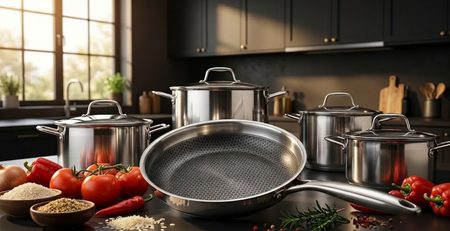
CookEX Titan Steel adds another feature to this layer: its Honeycomb Armor Surface Matrix.
The raised honeycomb pattern creates a textured cooking surface. In addition, the design helps protect the non-stick surface during everyday cooking.
As a result, the cooking surface does more than provide food contact. It also forms part of the cookware’s overall protective design.
How the Three Layers Work Together
The real value of triple layer cookware comes from the way the layers work together.
Think of the construction this way:
Stainless steel → Aluminium core → Non-stick cooking surface
Each layer handles a different task.
| Layer | Main Material | Primary Role |
|---|---|---|
| Outer layer | Stainless steel | Strength and durability |
| Middle layer | Aluminium | Heat conduction and distribution |
| Inner layer | Non-stick surface | Easier food release and cooking |
First, the stainless steel provides the outer structure.
Next, the aluminium core helps conduct and distribute heat.
Finally, the non-stick cooking surface provides a practical area for preparing food.
Therefore, the three layers complement one another. Instead of relying on one material for every function, the cookware uses different materials for different jobs.
How Does Triple-Layer Cookware Perform in an African Kitchen?
African cooking can involve a wide range of cooking methods.
For example, you may prepare Jollof rice in a large pot, simmer beans for an extended period or cook a rich Nigerian stew. At another time, you may fry fish, prepare a sauce or make semo for a family meal.
Because of this variety, cookware needs to support different cooking tasks.
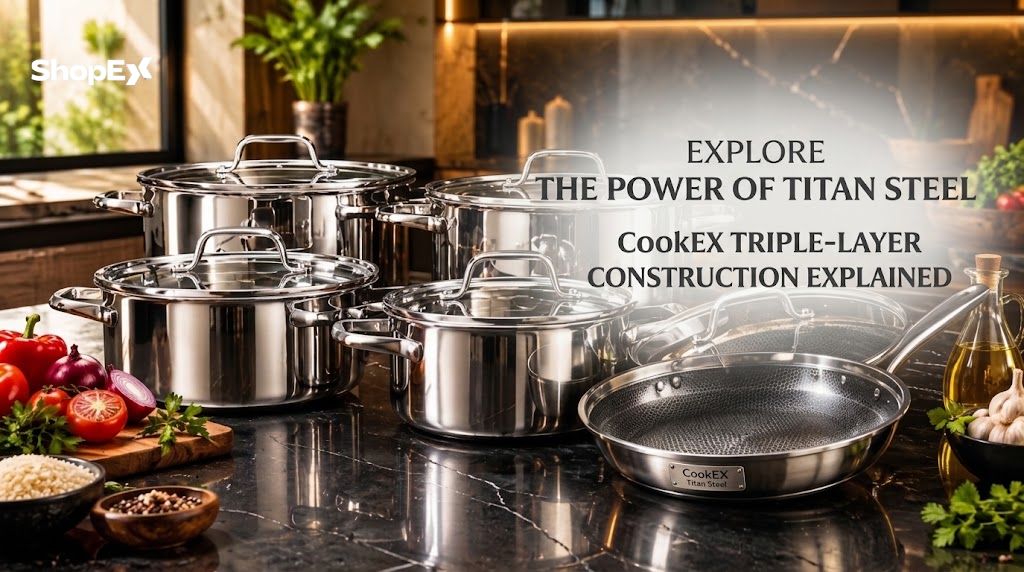
CookEX Titan Steel was designed with African kitchens in mind. The collection includes 8L, 6L, 5L and 3L casserole pots, as well as a 24cm frying pan.
The larger pots can suit family meals and larger batches. Meanwhile, the smaller sizes can work well for sauces, side dishes and everyday portions.
In addition, the frying pan provides a dedicated surface for tasks such as frying and searing.
Therefore, the combination of different pot sizes and multi-layer construction gives home cooks flexibility across many everyday meals.
Triple-Layer Cookware vs Single-Material Cookware
Triple-layer cookware differs from cookware that relies mainly on one material.
Single-material cookware depends heavily on the properties of that material. Triple-layer cookware, however, combines several materials to perform different functions.
Here’s a simple comparison:
| Feature | Single-Material Cookware | Triple-Layer Cookware |
|---|---|---|
| Construction | Mainly one material | Multiple integrated layers |
| Heat conduction | Depends on the material | Uses an aluminium core |
| Structural support | Depends on the material | Stainless steel outer layer |
| Cooking surface | Depends on the design | Dedicated non-stick surface |
| Food release | Depends on the cooking surface | Designed around a non-stick surface |
| Versatility | Varies by cookware | Combines several functions |
However, this does not mean triple-layer cookware automatically suits every cook.
Your choice should depend on how you cook, the materials used, the quality of construction and the cooking surface you prefer.
What Makes CookEX Titan Steel’s Construction Different?
CookEX Titan Steel combines several technologies within one cookware design.
First, its Triple-Layer Construction brings together stainless steel, aluminium and a non-stick cooking surface.
Next, the High-Conductivity Aluminium Core supports heat conduction through the cookware.
Then, the Honeycomb Armor Surface Matrix adds a raised texture to the cooking surface. The design also works with Laser-Etched Armor Matrix Technology as part of the surface construction.
Finally, the Magnetic 18/10 Stainless Steel Base supports compatibility with gas, electric, ceramic and induction cooktops.
Together, these features create a cookware system designed around strength, heat management and everyday cooking convenience.
Is Triple-Layer Cookware Worth It?
The answer depends on what you need from your cookware.
Before buying a new cookware set, consider the following:
- Material quality: What materials does the cookware use?
- Construction: How do the layers work together?
- Cooking surface: Does it suit the food you prepare regularly?
- Heat distribution: Does the design help manage heat effectively?
- Cooktop compatibility: Will it work with your cooker?
- Durability: Can it handle your regular cooking routine?
- Maintenance: What care does the manufacturer recommend?
- Pot sizes: Does the set offer sizes that suit your household?
- Warranty: What protection does the manufacturer provide?
For households that cook regularly, a well-designed multi-layer cookware set can offer a practical combination of different cooking features.
Frequently Asked Questions
Triple layer cookware combines three material layers, with each layer serving a different purpose. CookEX Titan Steel combines stainless steel, an aluminium core, and a non-stick cooking surface.
The three main layers consist of a stainless steel outer layer, a High-Conductivity Aluminium Core and a non-stick inner cooking surface.
Aluminium conducts heat efficiently. Therefore, manufacturers can use it as a core layer to help distribute heat through multi-layer cookware.
Not necessarily in every situation. Triple-layer cookware combines different materials to perform different functions. Your ideal cookware depends on your cooking habits, preferred surface and the quality of the construction.
Yes. CookEX Titan Steel works with induction cooktops. It also works with gas, electric and ceramic cooktops.
Yes. Proper care can help maintain the cookware and its cooking surface. For CookEX Titan Steel, allow the cookware to cool before washing. Then use a soft sponge and standard dishwashing liquid.
Final Thought
Triple layer cookware is about more than simply adding three materials together. The goal is to give each layer a specific job.
Stainless steel provides strength. Aluminium supports heat conduction and distribution. The non-stick surface helps with food release and everyday cooking.
Most importantly, these layers work together as one cookware system.
For African kitchens, where meals can range from Jollof rice and beans to stews, sauces and fried foods, understanding cookware construction can help you make a smarter buying decision.
If you want cookware that combines multiple materials and technologies in one collection, CookEX Titan Steel offers a triple-layer design created with everyday African cooking in mind.
Explore the CookEX Titan Steel 13-Piece Collection.